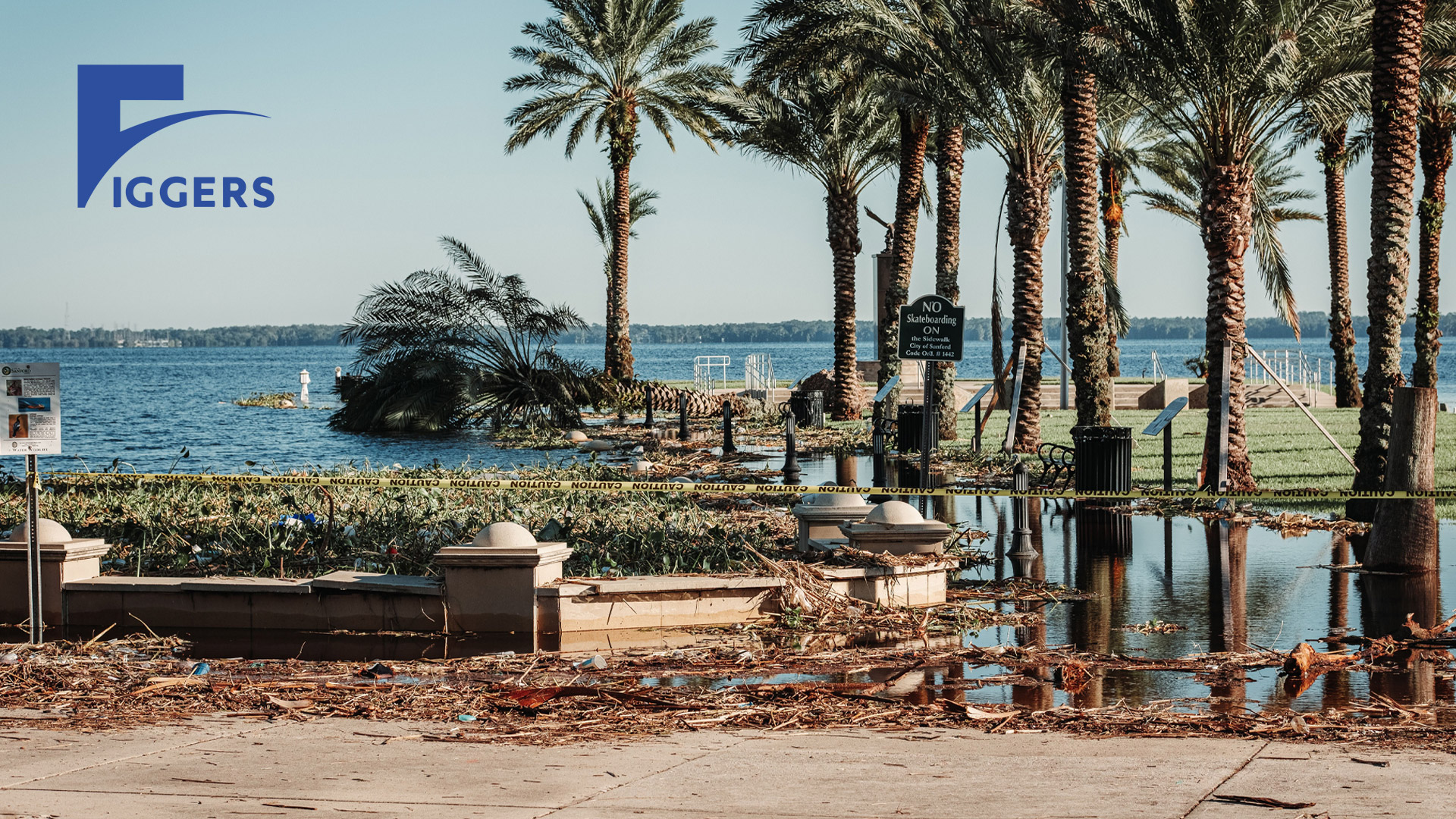
When a hurricane makes landfall, the first thing many communities lose isn’t power or water. It’s the ability to call for help. Towers go dark, fiber lines snap, and families who need to reach loved ones, first responders, and relief services are suddenly cut off.
Figgers Communication, Inc. builds its network and devices to keep people connected when it matters most. And when storms knock traditional infrastructure offline, Figgers moves fast to bring connectivity back.
Conventional networks depend on a small number of critical points: large towers, buried cable, and centralized equipment. When a hurricane topples a tower or floods a cable run, every home and business downstream goes dark at once. Rebuilding that infrastructure takes heavy equipment, crews, and long timelines, often while roads are still blocked. It’s one more reason that the fiber-first model is falling behind.
Communities can’t afford to wait weeks to communicate. Recovery depends on connectivity from the very first hour.
Figgers Small Cells are designed for exactly this kind of moment. Instead of relying on a single tower, Small Cells mount on existing utility poles, rooftops, or customer premises and link together into a high-density wireless mesh that delivers LTE or 5G service.
That mesh is self-healing. If one node is damaged, traffic automatically reroutes through the others, so a single failure never takes down an entire area. And because Small Cells install in hours, not months, with no trenching and no new towers, Figgers can bring coverage back to hard-hit neighborhoods while larger infrastructure is still being rebuilt.
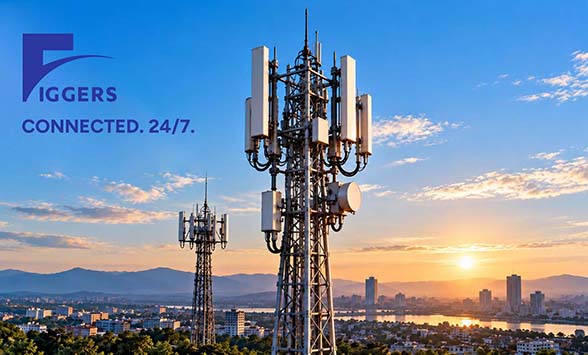
Storm recovery puts enormous strain on whatever network is still standing, as entire communities try to call, text, and check in at once. Figgers’ LTE towers and back-end systems use adaptive load-balancing and predictive handoff and 24/7 Support to detect congestion and direct bandwidth where it’s needed most. The result: steadier connections for residents and responders during the hours when demand peaks.
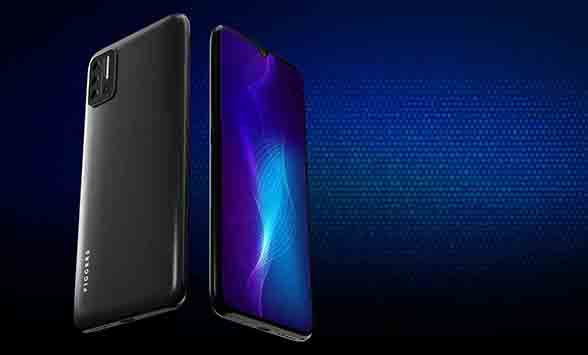
The Figgers Home Modem helps families, shelters, and relief sites get online quickly. Setup is plug-and-play: power it on, insert a pre-configured Figgers SIM, and it authenticates automatically. A multi-band antenna switches to the strongest available signal, keeping users connected as network conditions change during recovery.
For municipalities, school districts, and nonprofits, the modem supports bulk deployment with cloud-based remote management, including firmware updates, usage analytics, and SIM provisioning. Emergency managers can stand up connectivity across shelters, command posts, and relief stations from a single dashboard, and schools can [keep students learning](Why the Figgers Home Modem Outperforms Traditional Networks for Student Learning) while campuses recover.
Questions don’t stop when the storm does. Figgers customer support is available 24/7 by phone, text, chat, and email, so customers can get help reactivating service, replacing a damaged device, or keeping their number through Switch & Keep Number. Figgers Device Protection and Damage Repair Service help customers get back on their feet after storm damage.
Disaster recovery is a partnership. Figgers works with municipalities, school districts, and nonprofits to deploy resilient connectivity that can be stood up quickly and managed remotely, giving communities a dependable communication layer before, during, and after hurricane season. The same approach powers Figgers’ work into connecting the underserved community by closing the digital gap.
Hurricanes are a fact of life for coastal communities. Losing the ability to communicate doesn’t have to be. With self-healing Small Cells, an adaptive network, rapid-deploy home connectivity, and support around the clock, Figgers keeps communities connected through the storm and into recovery.
Prepare your community today. For emergency connectivity, municipal deployments, or business plans, call Figgers Communication at 1-800-223-5435, or email Customer.Service@Figgers.com.